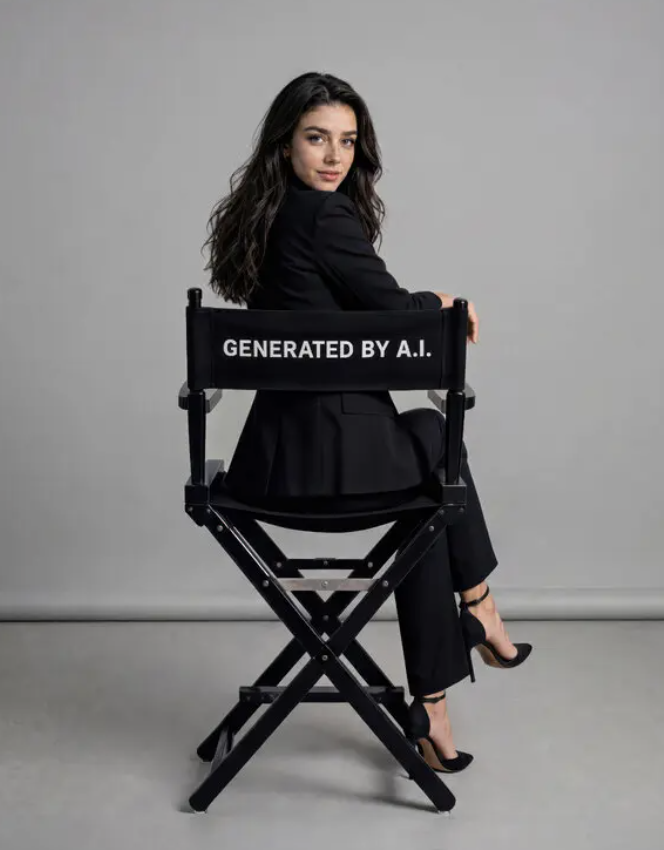
When AI Gets an Agent: What Tilly Norwood Means for Brand and IP Strategy
Earlier this week, Particle6 Productions announced that Tilly Norwood — an entirely AI-generated performer — will star in a feature film called Misaligned. SAG-AFTRA has already blasted the studio for what it describes as using stolen performances to put actors out of work and devaluing human artistry. The debate consuming Hollywood is largely about labor. But underneath it is a set of IP questions that will matter long after the credits roll.
Who owns a persona that was never human?
When Particle6 announced that Tilly would sign with a talent agency, it drew immediate backlash from actors, directors, and producers across the industry. That moment — an AI character entering into a contractual relationship — exposed how unprepared existing legal frameworks are for synthetic identity. Right of publicity doctrine protects the name, likeness, and persona of real people. It was not designed for a persona built from scratch by a production company. That gap creates both risk and opportunity depending on which side of it you're on.
If you're building an AI-driven brand asset — a character, a voice, a digital ambassador — who owns it, how it's registered, and how it's licensed matters enormously. A persona without proper IP structuring is an asset that can be copied, diluted, or disputed the moment it gains commercial value.
The trademark question no one is asking
SAG-AFTRA's position is that Tilly Norwood is not an actor, but a character generated by a computer program. From a trademark perspective, that framing is actually clarifying: a character is a brand. It can be registered. It can be licensed. It can be enforced against imitators.
The brands and studios moving into AI-generated talent now have a narrow window to establish priority — in character marks, in trade dress, and in the underlying creative assets. Those who treat this as a production decision rather than an IP decision will spend the next decade litigating what they should have registered at the start.
What this means if you're not in Hollywood
You don't have to be producing films to face the same structural problem. Any business deploying an AI persona — in marketing, in customer experience, in content — is creating something of potential brand value without necessarily thinking about ownership, registrability, or competitive risk. The Tilly Norwood story is a high-profile version of a decision thousands of companies are making quietly right now.
The time to structure those rights is before the asset has commercial traction, not after.